


Some experiences do not need years to leave a visible impact.
Sometimes, three weeks of focused learning, dialogue, teamwork, and hands-on experimentation are enough for early questions to become mature ideas, and for those ideas to grow into projects that can be presented, discussed, and further developed.
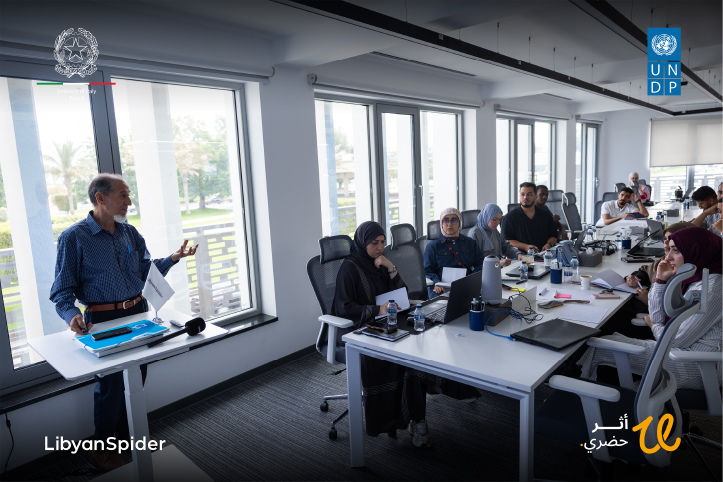
At the Maharah Urban Technology Bootcamp, participants went through a practical journey that began with exploring real urban challenges in the city of Tripoli. From understanding users and analyzing needs, to testing ideas and building early prototypes, the journey led to a final Demo Day where the first technical outcomes of real solutions began to take shape.
The bootcamp offered young people an intensive space to discover that technology does not begin with a ready-made solution. It begins with the right question, with listening, with understanding context, and with the ability to turn knowledge into something that serves people and the city.
From Learning to Application in Three Weeks
The participants began their journey by exploring three essential themes: sustainable development, urban technology, and design thinking.
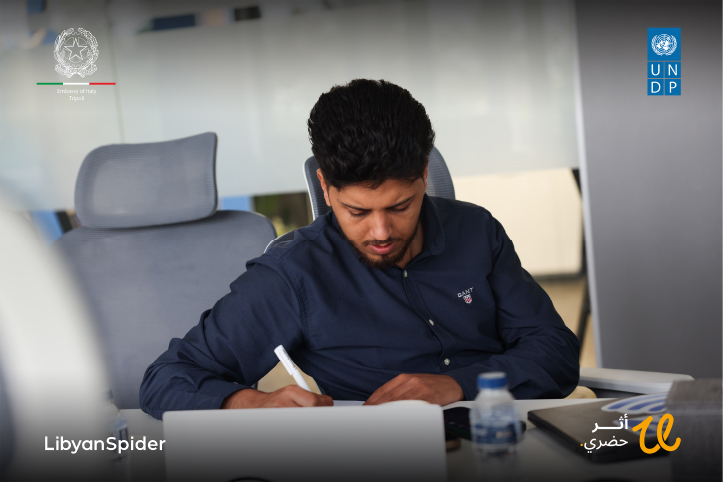
From the first days, learning moved beyond theory. Participants worked in teams to study real urban challenges, ask deeper questions, identify root causes, and think of digital solutions that could respond to these challenges in practical and meaningful ways.
This is where the value of impact-driven initiatives becomes clear. Their role is not only to deliver training content, but to create a space where young people can discover their abilities, test their thinking, and see themselves as active contributors to their surroundings.
A Multi-Dimensional Journey Toward Realistic Solutions
Over three weeks, the participants moved through an integrated learning experience that helped them look at their projects from three connected perspectives: the city, the user, and the continuity of the project.
Through sessions on urban planning, regulations, land use, and existing services, participants gained a clearer understanding of the environment in which urban solutions operate. A field visit to the Old City of Tripoli also gave them the chance to observe the relationship between place, history, identity, and the need for solutions that respect the local context.
In sessions focused on inclusive design and user experience, participants learned that the success of any project does not depend only on its technical idea. It depends on how well it serves the people it was designed for.
For this reason, teams worked on identifying their target users, building user personas, analyzing needs, and improving the way people would interact with their proposed solutions.
The teams also explored business models, value propositions, financial sustainability, marketing, and storytelling. These elements helped ensure that the projects would not remain only as technical ideas, but could become initiatives that are understandable, developable, and capable of communicating their value to audiences, partners, and potential supporters.
Through these stages, Maharah became more than a training experience. It became a real journey of building: learning how to think, how to test, and how to develop solutions with clarity and confidence.
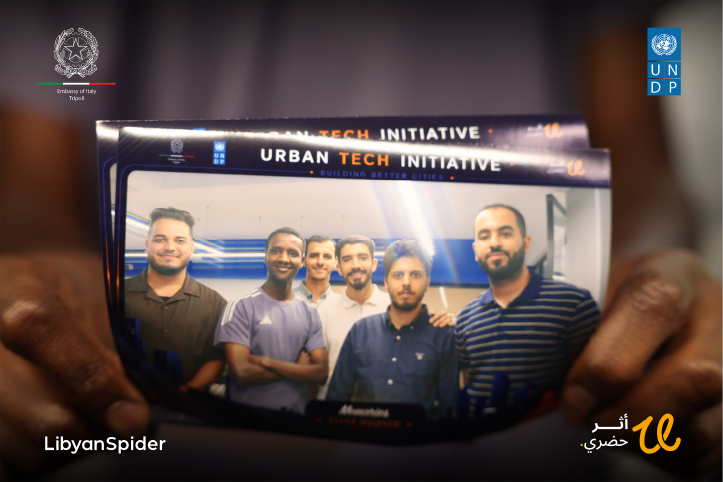
When Technology Moves Closer to People
At Maharah, technology was not treated as an end in itself. It became a way to ask deeper questions:
How do we read the challenges around us?
How do we listen to people’s needs?
How do we turn knowledge into solutions that can be tested in real life?
Throughout the journey, participants moved from being receivers of information to becoming active contributors. They observed, questioned, analyzed, and refined their ideas until they became clearer and more applicable.
This is the value of initiatives that invest in practical knowledge. Their impact appears not only in the projects presented at the end, but in the way participants learn to think, in the confidence they gain, and in their ability to see technology as a tool that serves people, not as a solution separated from them.
Demo Day: Where the Journey Became Visible
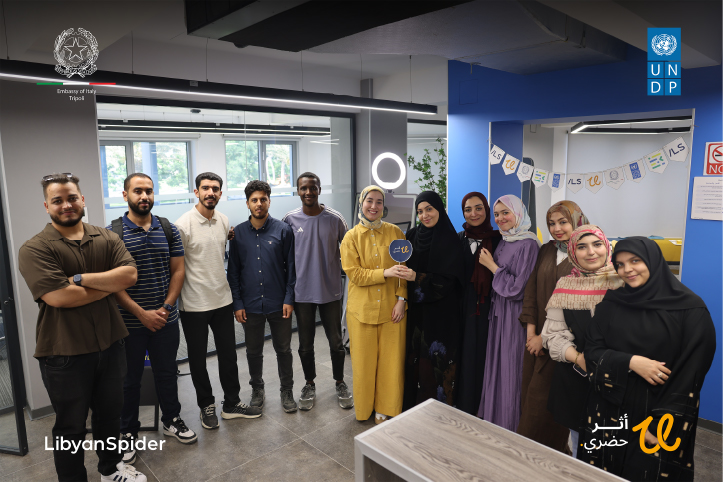
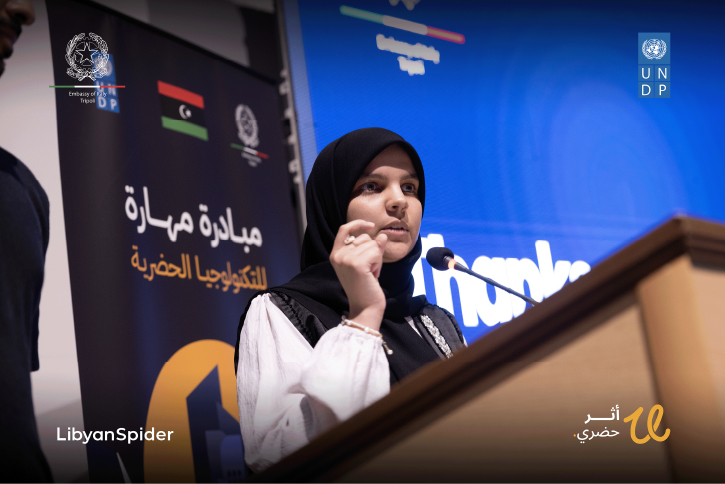
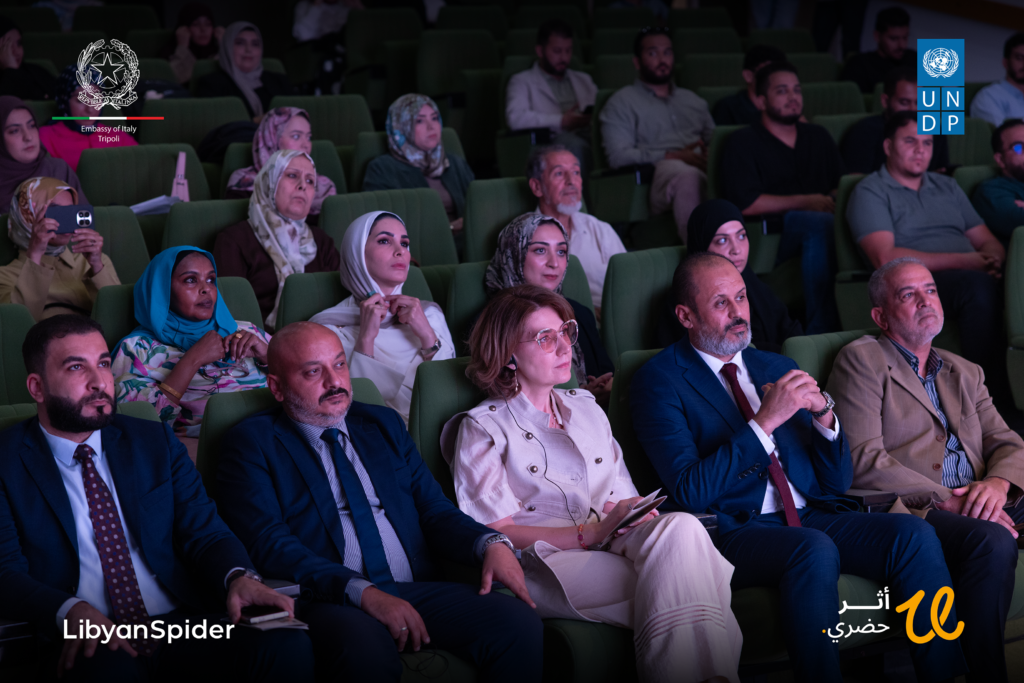
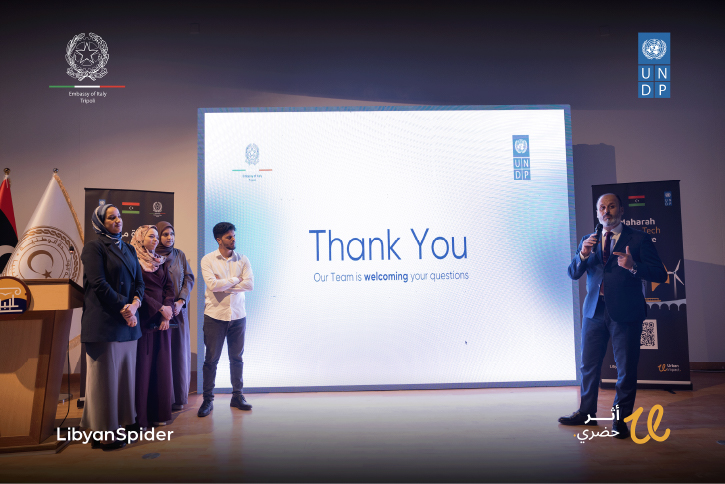
The Maharah Urban Technology Bootcamp concluded with a final Demo Day, where participating teams presented their final projects after three weeks of learning, research, application, and teamwork.
Participants shared their ideas and prototypes before a panel of experts and stakeholders, in the presence of H.E. the Minister of Housing and Construction, Engineer Issam Al-Tamouni, and the UNDP Resident Representative in Libya, Dr. Sophie Kemkhadze, alongside representatives from Tripoli Centre Municipality, partners, and experts.
During the event, the winning team was announced: Urban Advisor, a project that stood out for its urban technology solution, combining data analysis, a clear value proposition, and responsiveness to the needs of users and stakeholders.
Demo Day showed what three weeks of intensive learning can create when young teams are given the right space to experiment, improve, and present their work. The result was not only clearer projects and early prototypes, but also young people presenting their ideas with confidence before those who can support, guide, and help move them forward.
Why We Need to Continue
The Maharah experience reminds us that meaningful impact is shaped through three connected elements: an environment that encourages learning, expertise that is shared generously, and partnerships that open doors for young people to turn their ideas into practical solutions. Investing in youth is never a short-term initiative, it is an investment in society’s capacity to innovate, develop, and address its challenges with creativity and awareness.
Through ls.gives, we continue linking technology with education, knowledge with application, and digital skills with real needs that touch people’s daily lives. When technology becomes a form of giving, it doesn’t remain confined inside screens or training rooms. Instead, it becomes knowledge that can be shared, projects that can grow, and ideas that find their way into real-world implementation.
The impact of Maharah does not end with the final applause on Demo Day. It truly begins when participants return to their ideas with clearer questions, deeper confidence, and the motivation to keep building. What started across three weeks grows into wider paths: projects refined, concepts tested, and teams discovering that technology is fundamentally a tool for serving people.
Because the digital future is not built by technology alone, it begins with young people who learn, experiment, and turn everyday challenges into solutions that make a real difference!
Leave a Reply