


Every time we talk about artificial intelligence, we’re captivated by what it can do, It’s fast, accurate, and sometimes eerily good. But how often do we stop and ask what it’s doing to us?
We forget that AI doesn’t think on its own. It doesn’t choose or decide independently. It simply responds to the information we give it. So the real power, and the real responsibility still lies with us.
In that sense, the impact isn’t theirs, it’s ours. When guided well, they serve us; when misused, the consequences come back to us.
Artificial intelligence “AI” is no longer confined to labs or tech giants. It’s woven into the smallest details of daily life search engines, learning apps, entertainment suggestions, even the messages we write and the content we consume. As it becomes more involved in our decisions, the need for real awareness grows deeper.
That’s why this year’s Safer Internet Day message, “Smart Technology, Safe Choices” isn’t a celebration of tech itself, but a reminder, No matter how intelligent our tools become, the responsibility for how we use them remains human. The smarter, faster, and more embedded these tools become, the more urgently we must develop our awareness to match their pace.
How Can We Use AI and Smart Tools Safely?
Using AI safely doesn’t mean fearing it, it means approaching it with intention. It means protecting our privacy, preserving independent thinking, and knowing how to distinguish truth from algorithm-driven suggestion.
Today’s risks go beyond hacking or data leaks. They include manipulation, bias, echo chambers, and the gradual erosion of our ability to see the truth clearly.
We interact with AI and smart systems every day, often without understanding how they work. Apps tailor content to our preferences, online shops suggest things we didn’t know we wanted, and digital assistants help organize our lives. Digital safety begins with asking:
How do these tools work? What kind of data are we giving them? And who decides what we see in return?
The better we understand how algorithms are built, the more power we have to protect our decisions from unseen influence, and the more likely we are to use AI as a tool that serves us, rather than controls us.
Children and AI: Between Protection and Empowerment
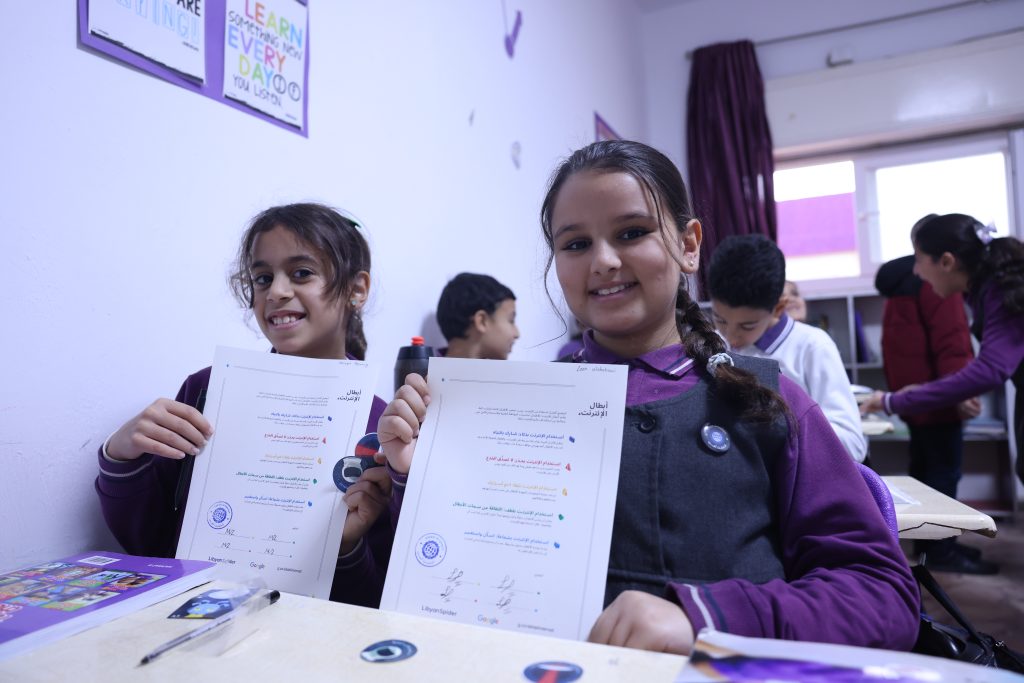
Children engage with AI daily, often without realizing it, from educational games and curated videos to chatbots. These tools are becoming part of childhood. But digital safety doesn’t begin with restrictions, it starts with open conversation. Awareness begins when children learn to ask questions before accepting what they see.
Families aren’t meant to monitor every click, but they can guide children in developing critical thinking. Schools must also go beyond teaching students how to use technology and begin teaching them how to think about it. AI is already in the classroom through tools like automated grading, content generation, and more. But without teaching students how to verify sources and tell the difference between human and machine-created content, learning becomes shallow and forgettable.
Real digital education is more than coding. It’s about raising a generation that understands the values and ethics behind the tools they use.

Work and AI: Productivity Meets Data Ethics
In the workplace, AI is a powerful productivity booster, from analyzing data to creating content and supporting decisions. But as its presence grows, it often outpaces the policies and frameworks that should guide its use, raising questions about privacy, employee rights, and accountability.
Without clear, transparent policies, data shifts from being an asset to a liability. The answer isn’t to walk away from AI, but to rethink how we use it, anchored in awareness, transparency, and responsibility.

On Safer Internet Day, we call for responsible digital awareness, one that goes beyond passive consumption, asks questions, seeks understanding, and makes conscious decisions.
One step is enough to bring us closer to a safer internet. Make digital awareness part of your everyday choices.
Share your ideas with us at @ls.gives on social media, or reach out via email:
gives@ls.ly


Leave a Reply